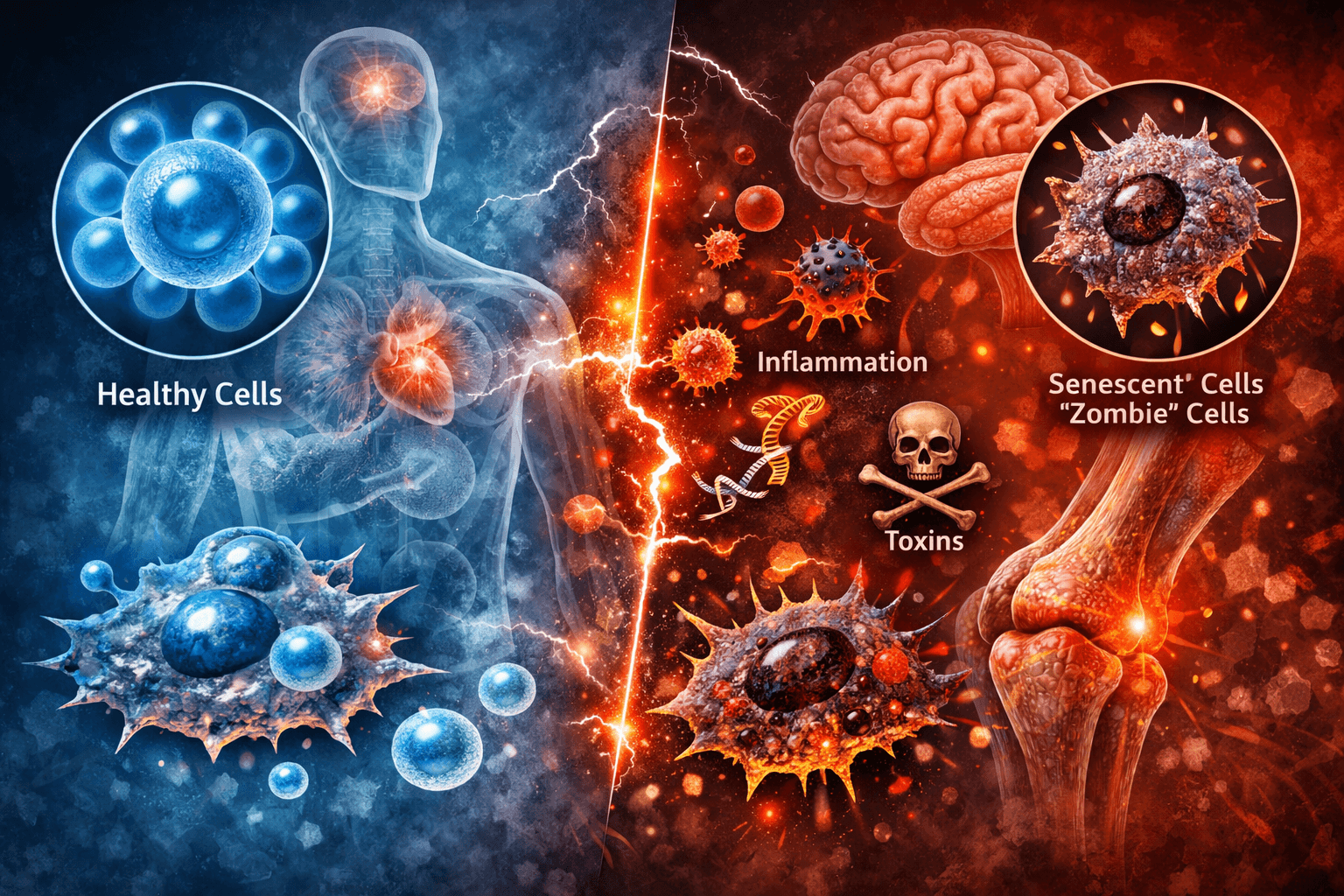
It started with an offbeat conversation over coffee. Two graduate students at Mayo Clinic were discussing cellular senescence—those mysterious “zombie cells” that refuse to die and accelerate aging throughout the body. The challenge? These cells had always been notoriously difficult to identify in living tissue, making them nearly impossible to target effectively.
But what emerged from that casual brainstorming session would become one of the most significant aging breakthroughs in recent years.
Key Takeaways
Zombie cells drive aging and disease by spreading inflammation, damaging tissues, and weakening immunity.
Aptamer technology now allows precise identification of senescent cells, accelerating targeted anti-aging therapies.
Natural senolytics like quercetin, fisetin, piperlongumine, and trans-resveratrol offer a science-backed way to support healthy aging today.
What Are Zombie Cells and Why Should You Care?
When you’re young, your immune system efficiently clears out these damaged cells. But as you age, your body’s cleanup crew becomes less effective. Senescent cells accumulate in your liver, brain, muscles, skin, and virtually every other tissue. This accumulation of senescent cells is considered a hallmark of aging, contributing to tissue dysfunction and the development of age-related diseases. By age 50, you could have billions of these cellular bandits wreaking havoc on your health.
The Toxic Truth About What Zombie Cells Do to Your Body
Senescent cells don’t just sit there harmlessly. They actively sabotage your health through a process scientists call SASP—the senescence-associated secretory phenotype. In plain English, they release a “noxious brew of biological signals” that spreads inflammation like wildfire.
Here’s what research shows zombie cells contribute to:
Brain fog and cognitive decline. These cells penetrate your brain tissue, triggering neuroinflammation that clouds your thinking and impairs memory. The accumulation of senescent cells can reduce mental clarity, affecting your focus and overall cognitive sharpness. Studies demonstrate they contribute to conditions like Alzheimer’s disease by disrupting normal brain cell function.
Stubborn weight gain and metabolic dysfunction. Senescent cells interfere with insulin sensitivity and glucose metabolism, making it harder to maintain a healthy weight. They disrupt the very pathways that help your body process and burn fat efficiently.
Joint pain and stiffness. Zombie cells release enzymes called matrix metalloproteinases (MMPs) that literally eat away at your cartilage. As your cushioning breaks down, you experience increasing discomfort and reduced mobility.
Chronic fatigue. These toxic cells drain your mitochondria—the energy factories inside your cells—leaving you exhausted even after a full night’s sleep.
Accelerated skin aging. Senescent cells break down collagen, the structural protein that keeps skin firm and youthful. The result? More wrinkles, sagging, and loss of elasticity.
Weakened immunity. As zombie cells accumulate, they create chronic, low-grade inflammation throughout your body, overwhelming your immune system and making you more vulnerable to illness.
Perhaps most troubling, zombie cells have an insidious ability to turn neighboring healthy cells into zombies too. It’s a misery-making chain reaction that accelerates with each passing year.
The Role of Immune Cells: Nature’s Cleanup Crew
Think of your immune system as the body’s own janitorial staff, constantly on patrol for troublemakers. Among their most important jobs? Sweeping away senescent cells before they can cause harm. These immune cells—especially natural killer cells and T cells—are experts at recognizing and eliminating senescent cells that have stopped dividing and are no longer pulling their weight.
When everything is working as it should, this cellular cleanup keeps your tissues fresh and functional, supporting healthy aging and protecting you from the negative effects of accelerated aging. But as we get older, the immune system’s efficiency can decline. That means more senescent cells slip through the cracks, building up in organs and tissues. The result? A spike in inflammation and oxidative stress, both of which are hallmarks of age-related diseases.
Research shows that when immune cells are able to effectively target and remove these dysfunctional cells, the body is better equipped to maintain healthy cellular function and stave off age-related conditions. By supporting your immune system—through lifestyle choices, targeted supplements, and emerging therapies—you can help ensure your body’s natural cleanup crew keeps working at its best, reducing the risk of inflammation and the cascade of problems that come with it.
The Breakthrough That's Revolutionizing Anti-Aging Medicine
When Mayo Clinic researchers first demonstrated that removing senescent cells could reverse aspects of aging in animal models, it sent shockwaves through the scientific community. Suddenly, aging wasn’t just an inevitable decline—it was a targetable process.
Now, a groundbreaking Mayo Clinic discovery has enabled precise identification of these zombie cells, opening new possibilities for direct targeting.
Using tiny, shape-shifting DNA molecules called aptamers, the research team developed a revolutionary method to tag and identify senescent cells with unprecedented precision. This discovery opens new doors for treatments that could help millions of people reclaim their vitality and health.
Major medical centers worldwide, along with the National Institutes of Health, began investigating compounds that could selectively eliminate these problematic cells. Scientists screened thousands of natural substances, searching for ones with strong senolytic properties that could kill zombies while leaving healthy cells unharmed.
Out of thousands of candidates, four natural compounds emerged as spectacularly successful senolytic agents: quercetin, piperlongumine, fisetin, and trans-resveratrol. These key senolytic ingredients are now widely recognized for their role in supplement formulations targeting cellular rejuvenation. Together, they represent what scientists call “senolytics”—substances that selectively eliminate senescent cells.
The Four Natural Zombie-Cell Killers Backed by Science
1. Quercetin: The Precision Strike Weapon
Found naturally in foods like red onions, kale, berries, and apples, quercetin emerged as a senolytic superstar in groundbreaking Mayo Clinic research. What makes it remarkable is its precision. Zombie cells protect themselves with molecular “armor” called BCL-2 pathways that prevent your body’s natural cleanup process. Quercetin penetrates this defense, leaving the cells vulnerable to elimination—while leaving healthy cells completely untouched. Research demonstrates quercetin's senolytic activity, showing its ability to selectively induce apoptosis in senescent cells and support cellular rejuvenation.
Clinical studies reveal impressive benefits beyond zombie-cell clearance. Athletes taking 500 mg daily experienced improved physical performance, faster recovery, and reduced muscle soreness within just 24 hours. Other research shows quercetin promotes deeper, more restorative sleep, reduces fatigue, and increases daily energy levels.
For skin health, quercetin offers multiple benefits. It blocks the enzymes that break down collagen while simultaneously stimulating new collagen production. It provides UV protection, reduces inflammation, and helps maintain your skin’s moisture barrier.
The challenge? Regular quercetin has notoriously poor absorption—your body may only absorb 5-10% of what you consume. Advanced phytosomal delivery technology solves this problem by wrapping quercetin in lipid microspheres that mimic cell membranes, increasing absorption up to 20-fold.
2. Piperlongumine: The Ancient Energy Restorer
Extracted from long pepper, a spice used in Ayurvedic medicine for over 2,000 years, piperlongumine targets the root cause of age-related fatigue. Traditional healers prescribed it to warriors and travelers who needed sustained stamina for demanding journeys. Modern research now confirms why it works so powerfully.
Piperlongumine is a potent senolytic, featuring a unique “dual electrophile” mechanism that selectively eliminates senescent cells while preserving healthy ones. In aging studies, animals given piperlongumine showed remarkable improvements in activity levels, task completion, and overall vitality—behaving with the energy of much younger specimens.
It also improves cardiovascular function by reducing arterial stiffness, allowing better blood flow and oxygen delivery to your muscles and organs. This translates to improved exercise tolerance, easier movement throughout the day, and sustained energy without crashes. Additionally, piperlongumine may support exercise recovery by aiding tissue repair and reducing fatigue after physical activity.
Research demonstrates that piperlongumine works synergistically with other senolytics, meaning the effects multiply when combined with complementary compounds.
3. Fisetin: The Strawberry Breakthrough
You’d need to eat approximately 30 pounds of strawberries to get a clinically effective dose of fisetin—or you could take a concentrated supplement. This powerful polyphenol from strawberries and other fruits doesn’t just slow aging; research shows it can actually reverse certain aging processes at the cellular level.
In landmark studies, aged mice given fisetin lived significantly longer and showed fewer age-related pathologies than control groups. They didn’t just survive longer—they remained healthier and more youthful throughout their extended lifespan. Fisetin is considered the most potent senolytic in preclinical studies, with superior senolytic activity and senolytic effects on aging and cellular health compared to other compounds.
Fisetin stands out for its ability to cross the blood-brain barrier, one of the few natural compounds with this capability. Once inside, it reduces neuroinflammation, enhances synaptic connections for faster recall, protects brain cells from damage, and helps improve memory and cognitive function. Its anti inflammatory properties are especially notable in reducing neuroinflammation. At lower doses, fisetin may provide anti-inflammatory and immunosuppressive effects without significant cytotoxicity, which could be advantageous for tissue protection and immune modulation.
For joint health, fisetin inhibits the MMPs that break down cartilage, helping preserve the cushioning that keeps joints moving smoothly. It activates genes associated with extended lifespan, including the critical SIRT1 longevity gene.
4. Trans-Resveratrol: The Longevity Molecule
The “French Paradox”—how the French consume rich foods yet maintain remarkably healthy hearts and longer lifespans—owes much to their daily consumption of red wine rich in trans-resveratrol. This compound has become one of the most studied longevity molecules on Earth.
What makes trans-resveratrol revolutionary is its ability to activate SIRT1, your body’s master “youth switch.” This enzyme controls hundreds of processes linked to healthy aging, including DNA repair, mitochondrial health, stress resistance, and stem cell function.
But trans-resveratrol doesn’t just kill zombie cells—it silences them. Research shows it significantly suppresses the toxic SASP secretions from senescent cells while reducing senescence markers. The zombie cells remain, but they stop poisoning healthy cells around them.
The benefits extend throughout your entire body: healthier blood vessels, protected neurons, better memory, improved skin elasticity, enhanced blood sugar control, better fat metabolism, and stronger mitochondrial energy production.
The Synergy Effect: Why Combination Matters
What researchers discovered is that these four compounds work even more powerfully together than individually. Each attacks zombie cells through different mechanisms:
Quercetin destroys zombie cell armor and triggers elimination
Piperlongumine clears cells from cardiovascular and brain tissues
Fisetin pops zombie cells and fights inflammation
Trans-resveratrol silences toxic secretions and activates longevity genes
This multi-pathway approach creates a comprehensive senolytic system that eliminates zombie cells more completely and effectively than any single compound could achieve alone. The senolytic potential of combining these agents lies in their synergistic effects, which can significantly improve outcomes in aging and tissue repair.
Currently, roughly 20 clinical trials are underway testing senolytic supplements against the signs and symptoms of aging. Early results are promising. Observed health benefits from these clinical trials include improved tissue function, reduced disease burden, and enhanced overall vitality in humans.
The Connection to Age-Related Conditions
Why does the buildup of senescent cells matter so much? Because these so-called “zombie cells” don’t just sit idly by—they actively contribute to some of the most common and serious age-related conditions. The secretions from senescent cells create a toxic environment that accelerates the aging process and drives disease progression.
These cells release pro-inflammatory factors that can damage surrounding healthy cells, disrupt tissue function, and set the stage for chronic illnesses. That’s why eliminating senescent cells is emerging as a powerful strategy to support healthy aging and reduce the burden of age-related diseases.
But you don’t have to wait for the next medical breakthrough to take action. Lifestyle interventions such as regular exercise, a diet rich in fruits and vegetables, and effective stress management, can boost immune function and help reduce your body’s senescent cell burden. By understanding the direct role these cells play in age-related conditions, you can make informed choices to support healthy aging, protect your cells, and maintain your vitality for years to come.
Beyond Pills: Lifestyle Factors That Fight Cellular Senescence
While senolytic compounds offer powerful support, research shows that certain lifestyle interventions can also reduce zombie cell accumulation:
Exercise is among the most effective natural senolytics. Physical activity optimizes immune health and creates healthier tissue environments where immune cells can more effectively recognize and eliminate senescent cells. Studies demonstrate that regular exercise counters age-related accumulation of zombie cells.
Intermittent fasting activates many of the same cellular repair pathways triggered by senolytic compounds, helping your body clear out damaged cells more efficiently.
Plant-based polyphenols from colorful fruits and vegetables provide natural senolytic support. However, achieving therapeutic doses through food alone remains challenging—that’s where concentrated supplementation fills the gap. These interventions and supplements support cellular health by reducing the accumulation of senescent cells, thereby improving tissue rejuvenation and overall vitality.
Many high-quality senolytic supplements are also gluten-free, making them suitable for individuals with gluten sensitivities or celiac disease.
The Future of Healthy Aging Is Here
The discovery that zombie cells drive so much of what we consider “normal aging” represents a paradigm shift in medicine. For the first time, we can target the root cause of multiple age-related conditions simultaneously rather than treating symptoms individually. A comprehensive review of anti-aging strategies, including senolytics supplements, highlights the growing body of evidence supporting their role in promoting healthy aging.
Your body has a remarkable capacity to repair, restore, and rejuvenate itself, if given the chance. By clearing away the billions of zombie cells that block this natural process, you’re not just addressing individual symptoms. You’re removing the underlying cause of premature aging and unleashing your body’s innate healing potential.
The question isn’t whether senolytics will transform healthy aging. Based on the mounting evidence, they already are. The question is whether you’ll take advantage of this breakthrough science to reclaim your vitality, energy, and quality of life.
Summary
Senescent cells—often called “zombie cells”—are damaged cells that refuse to die and actively accelerate aging by spreading inflammation throughout the body. A groundbreaking Mayo Clinic discovery using DNA aptamers has enabled precise identification of these cells, opening new possibilities for direct targeting. Research now shows that natural senolytic compounds—quercetin, piperlongumine, fisetin, and trans-resveratrol—can help eliminate or silence these harmful cells. When combined with supportive lifestyle strategies such as exercise and fasting, senolytics represent a major shift in how we approach longevity, vitality, and healthy aging.
Frequently Asked Questions
What are senolytic supplements?
Senolytic supplements contain compounds that selectively target senescent (“zombie”) cells that contribute to aging and inflammation.
Why are senescent cells harmful?
Over time, they release inflammatory toxins (SASP) that damage tissues, impair metabolism, weaken immunity, and accelerate aging.
Are senescent cells always bad?
No. They play a temporary role in healing—but when they accumulate, they become harmful.
Which natural compounds act as senolytics?
Research highlights quercetin, fisetin, piperlongumine, and trans-resveratrol as the most promising natural senolytics.
Should I talk to my doctor before taking senolytics?
Yes. Always consult a healthcare provider before starting any new supplement regimen.
Pearson SJ, Maher J III, et al. A new tool to find hidden “zombie cells.” Mayo Clinic News Network. 2025 Oct 27. Available at: https://newsnetwork.mayoclinic.org/discussion/a-new-tool-to-find-hidden-zombie-cells/
ScienceDaily Staff. A grad student's wild idea triggers a major aging breakthrough. ScienceDaily. 2025 Dec 13. Available at: https://www.sciencedaily.com/releases/2025/12/251213032625.htm
Maher J III, Pearson SJ, et al. An unbiased cell-culture selection yields DNA aptamers as novel senescent cell markers. Aging Cell. 2025; e70245. PubMed PMID: 40970817. https://pubmed.ncbi.nlm.nih.gov/40970817/
Kumari R, et al. Senolytic cocktail dasatinib and quercetin attenuates chronic high altitude hypoxia associated bone loss in mice. Frontiers in Physiology. 2024 Dec 5;15:1522157. PMCID: PMC11621334. https://pubmed.ncbi.nlm.nih.gov/39638948/
Farr JN, LeBrasseur NK, et al. The senolytic drug fisetin attenuates bone degeneration in a preclinical model. Frontiers in Cell and Developmental Biology. 2023 Feb 21;11:1122338. PMCID: PMC9977556. https://pmc.ncbi.nlm.nih.gov/articles/PMC9977556/
Yousefzadeh MJ, Zhu Y, et al. Fisetin is a senotherapeutic that extends health and lifespan. EBioMedicine. 2018;36:18–28. PMCID: PMC6197652 https://pmc.ncbi.nlm.nih.gov/articles/PMC6197652/

Susan Clark
Susan Clark is an award-winning, Emmy-nominated journalist and author who has written about nutrition, health, and wellness for 27 years. She has developed content for articles, reports, books, videos, and television news segments featuring some of today’s top alternative and integrative doctors. She earned a bachelor of science in broadcast journalism from Texas Christian University. She lives in Los Angeles with her husband, two sons, and numerous pets.